Three apprentices complete their studies at Rowett Insurance

Three more of our staff have completed their modern apprenticeship training, supported by our insurance partner, Aviva.

Georgia Bunt, Briony Vincent and Stacey Woodley studied with Davies Group in order to deepen their knowledge and understanding of the industry and sharpen their skills in working in this complex field.

Stacey, who’s been with the firm over 22 years, says: “The apprenticeship has given me more confidence within my role and enabled me to share my knowledge and skills with my colleagues. 

“I faced some unexpected challenges on the way, but I was well supported by the managers at Rowett and my trainers to achieve my final goal.

“I would recommend anyone working in the industry looking for a long standing career to do this apprenticeship as it is extremely helpful.”

Gareth Rowett, Commercial and Agricultural Director, commented: “It doesn’t matter how long you’ve been working or how senior your role, you can always learn more. I’m doing an apprenticeship myself and it’s been great to see the development of our staff. We’re all grateful to Aviva for the support to improve our skills.”

Georgia, who’s a fairly new members of staff, says: “I thoroughly enjoyed the apprenticeship and learned vital knowledge that I needed to pursue my ongoing career as a commercial broker.”

And Briony adds: “Rowett allowed us to have time for revision and meetings within work time and were very supportive of our learning. The staff at Davies were very helpful, giving us a lot of tools and meetings to support our education.”

Linzie Barnes, Learning and Development Consultant at Aviva, said: “One of the biggest issues brokers are facing is attracting and retaining talent. Aviva is proud to be a part of this story by funding three apprentices who are now coming to the end of their learning journey.

“Together, Rowett and Aviva are investing in up-skilling talent through knowledge, skills and behaviours with the added bonus that the apprentice attains their Certificate of Insurance at the end of it.

“It’s fantastic to see a broker like Rowett embracing this opportunity and growing their talent.”


Rowett Insurance is often looking to increase our team of insurance brokers – at all levels – so if you are looking for a new position, please get in touch by email to office@rowett-insurance.co.uk or follow us on LinkedIn where we always post new jobs.

alarm testing

Important news about remote monitored commercial alarm system ‘Redcare’

In recent news, BT has announced the withdrawal of its industry-leading Redcare alarm signalling products, a move that will impact thousands of UK business customers and potentially their insurance policies.

Redcare alarm signalling has long been a crucial component in ensuring the security and safety of businesses, providing a reliable connection between alarm systems, monitoring centres and customers’ mobile devices. With new systems no longer being sold from the end of February 2024 and product servicing being phased out by 1 August 2025, many businesses may face challenges in maintaining the same level of security and it could affect compliance with their commercial insurance requirements. Leading insurers estimate that 120,000 business, organisations and private homes across the UK use Redcare.

Around 75 percent of Redcare systems use the old analogue phone lines and will become obsolete by the end of 2025 anyway. Your installer may therefore have already been in contact with you about this.

If you currently rely on Redcare alarm signalling the advice is to promptly seek alternative solutions to ensure the continuous protection of your premises. Failure to address this issue could not only compromise the security of the business but also potentially lead to insurance policy non-compliance. It is imperative for affected businesses to proactively engage with their alarm system providers and insurance companies to explore suitable alternatives and make the necessary transitions smoothly to avoid any disruptions in their security measures.

If you have a Redcare system now, we advise that you act quickly as it’s almost inevitable that the closer we get to 1 August 2025, the more likely installation bottlenecks and product shortages will begin to occur.

Many customers will be unaware of the technological specifications delivered through Redcare and it’s important that the replacement service they choose provides a like for like performance level. Our insurance partner AXA advises that replacement systems that would be considered compliant must be:

  1. Installed by a company regulated by the National Security Inspectorate or a company regulated by the Security Systems and Alarm Inspection Board.
    and
  2. Includes an annual maintenance contract with an appropriate alarm maintenance company or regulated installer.

Alternative remote monitoring alarm systems on the market include:

  • Emizon – top specification using both wireless and broadband connections.
  • DualCom – uses a combination of traditional phone line and mobile network.
  • Digicom – basic and low cost system using traditional phone line only.

Though most business owners don’t need to be familiar with the technical specifications of their remote alarm monitoring, it will be important to take advice from both your installer or maintenance company and your commercial insurance provider.

Once you have established your needs, if you need further guidance whether your new alarm system is compliant with your policy, please get in touch on 01726 871144.

feefo gold trusted service award

Rowett Insurance Broking receives Feefo Gold Trusted Service Award 2024

Rowett Insurance Broking has won the Feefo Gold Trusted Service Award, an independent seal of excellence, which recognises businesses that consistently deliver a world-class customer experience.

Feefo established the Trusted Service Awards in 2014 to recognise brands that use the platform to collect verified reviews and receive exceptional feedback from their customers. The awards are unique because they truly reflect a business’s dedication to providing outstanding customer service by analysing feedback from real customers.

The insurance market is extremely competitive and the cost of living crisis has made all of us more cautious with our spending. Insurance is one area that customers may try and cut back on if it’s not a legal duty. Insurance firms that stand out will be those who deliver excellent service with a high importance on customer advocacy. This award celebrates brands that are delivering standards that go above and beyond.  

Feefo presented Gold Trusted Service Awards to businesses that have collected at least 50 reviews between January and December 2023, with a service rating of between 4.5 and 5. Rowett Insurance Broking achieved an average rating of 4.8 across 121 reviews during the year.

Gareth Rowett, Commercial and Agricultural Director, commented: “This is the second year running that we’ve won the Gold award and we couldn’t be more pleased. It really reflects the importance of customer service, something that all of our staff work very hard on. In this digital age, we are proud to deliver a personal service in addition to our online offerings.”

Congratulating Rowett Insurance on winning this year’s award, Tony Wheble, CEO at Feefo, said: “With customers continuing to build resilience in a time of economic uncertainty, we’re delighted to showcase clients who are continuing to go above and beyond for each and every customer. 

“The Trusted Service Awards have always been about recognising companies, like Rowett Insurance, that go above and beyond the norm to deliver a great service and receive great feedback from delighted customers in return.”

Notes to Editors

About Feefo

Working with over 6,500 brands, Feefo is the world’s largest provider of verified reviews, helping brands understand customers by analysing verified reviews and providing insight into trends, needs and habits. Please visit: www.feefo.com

About Rowett Insurance Broking Limited

Rowett Insurance is a specialist commercial and agricultural broker based in Cornwall with offices in Plymouth and two sister brands: tractorinsurance.co.uk provides insurance cover to tractor owners across the UK through an online quote and buy facility; agri-insurance.co.uk is a broker-to-broker service offering farm and country and farm and motor policies to brokers throughout England, Scotland and Wales. Find out more about us: rowett-insurance.co.uk 

luxury cars in a dealership

The top things that affect motor trade policies

When it comes to motor trade insurance, there are some key things that could affect policies. It is important to recognise and understand these if you are in this industry, to avoid being without important protection that you need. At Rowett Insurance we want to support you in this. Take a look at our blog below which explores some common issues.  

Defective Workmanship Insurance

This type of cover is usually taken out as part of a motor traders combined policy. It provides cover for accidental damage of client vehicles whilst left in your custody and control. It is crucial that any incidents of accidental damage are notified to your broker or insurer at the time the incident occurs, otherwise the majority of these cases end up with court proceedings when the matter could have been rectified at the time of the loss.

Motor Insurance Database (MID)

Uninsured drivers currently cost UK motorists over £500 million per year1. This means every time a driver pays their insurance premium, a portion of this amount goes to pay for these illegal road users. To tackle this problem, the Motor Insurance Database (MID) was established.

The regulations place a direct obligation on motor traders to load their vehicle details at inception and update the MID immediately for any vehicle acquisition or disposal.

Which vehicles should be added on the MID?

  • All permanent vehicles insured on your motor trade policy which are your property.
  • Trade plates.
  • Temporary vehicles.
  • Stock vehicles do not need to be added on the MID.

If you don’t remove any vehicle you dispose of immediately from the MID, then you could be liable for any third party claims after you have sold it if the new owner hasn’t arranged insurance. This would then affect your insurance premium.

Personally Owned Vehicles

It is common practice within the motor trade market to extend the policy to include vehicles privately owned by directors of the business.

Only directors of limited or public limited companies and their spouses are able to have their privately owned vehicles covered under a motor trade policy. Acceptance is normally restricted to a maximum of two privately owned vehicles per director and one privately owned vehicle per spouse.

You need to specifically request this extension for any personally owned vehicles to be covered under the policy.

County Court Judgments (CCJs)

Do you have, or have you ever had, a County Court Judgment against your name?

If the answer is yes, then your broker and/or insurer need to know about it. It is vitally important, and your duty to declare, any CCJs against you, be them personal or business related, as this can have an impact on your insurance policy which could be invalidated if not disclosed.

At Rowett Insurance we are here to support you. Please speak to us today for a no-obligation review of your current cover and a chat about your unique requirements. Get in touch on 01726 871144 option 3.

  1. https://www.mib.org.uk/media-centre/ ↩︎
email icon on computer screen

Cyber Insurance Focus: How Scammers Steal Your Funds

Funds transfer fraud is becoming an increasingly common problem for most modern organisations. Fraudsters dupe innocent businesses and individuals into transferring what they believe are legitimate payments to fraudulent bank accounts.

However, it’s not always a business that can suffer a loss in this way, but it’s customers too. Customer payment fraud occurs when a fraudster poses as a business and deceives customers into transferring money to a fraudulent account. This type of fraud involves tricking customers by pretending to be a legitimate business. The fraudster convinces customers to send money to a fake account that they control.

One business affected by such a loss was a private, tuition-paying school responsible for educating 11-to-18-year-olds. The school in question has boarding facilities in place and attracts students from many different countries around the world.

Lack of multi-factor authentication lets fraudster in

The scam began when the school’s bursar fell for a credential phishing email. Credential phishing emails are used by scammers to trick people into handing over their login details, typically by directing them to a link that takes them to a fake login page.

In this case, the bursar received an email from what appeared to be Microsoft, asking him to validate his account details online. The bursar clicked on the link provided, which took him to an authentic-looking landing page where he inputted his email login details.

Despite appearances, however, the landing page was actually fake, and the bursar had unwittingly volunteered his email login details to a fraudster. What’s more, his email account didn’t have multi- factor authentication in place, so the fraudster was then able to access the account remotely and gather valuable information including the personal data of students and their parents.

Multi-factor authentication (MFA) is an authentication process that is used to ensure that a person is who they say they are by requiring a minimum of two pieces of unique data that corroborates their identity. Most cases of business email compromise could be prevented by implementing it.

Implementing MFA can be a simple process, depending on the system or account you are trying to secure. Many popular online services, such as Google and Facebook, offer MFA as an option for users to enable. For businesses, there are various MFA solutions available that can be integrated into existing systems and the best place to start is by talking to your IT department or service provider.

Scam initiated with offer of discount

Having spotted an opportunity, the fraudster moved on to the next stage of their scam. Their first step was to set up an email address that looked substantially similar to the bursar’s, but with the addition of an extra letter to the address line. So instead of saying @abcschool.com, it became @abcscchool.com.

The next step was to carefully select which parents to target. Rather than adopting a scatter gun approach and emailing every parent on the list, the fraudster specifically selected parents based overseas.

With the targets selected, the fraudster sent out an email about school fees. The email offered a discount of up to 25 percent if parents paid for the spring and summer terms in one lump sum.To add a sense of urgency, the email stated there was a deadline for the offer.

Social engineering attacks rely on manipulating and exploiting typical human behaviours, and in this case the fraudster knew the scam would have a better chance of success if the parents were provided with an incentive to make the payment within a set time frame.

In addition, the email was well thought through and included a number of features to make it appear more authentic. For example, not only did the fraudster use proper spelling and grammar and include the bursar’s genuine email signature, he also went on to state that if the student was unable to complete the academic year for whatever reason, then the fees would be reimbursed on a pro-rata basis.

School’s security breach puts parents out of pocket

Unfortunately, this offer proved to be too tempting for some and six parents fell for the scam, transferring the tuition and boarding fees over to the fraudulent account details provided on the email. With tuition and boarding fees at the school costing some £10,050 per term, the amount paid out by each parent at a 25% discount amounted to some £15,075.

It was only after a few days, when one of the parents that had received the email forwarded it to one of the school’s administrators to check the validity of the discount offer that the school became aware of the scam. The school immediately notified all parents about the scam and urged them to be aware of any suspicious emails that appeared to have come from the school.

Of the six parents affected, just two were able to get their money back

The parents that fell for the scam reported the incident to their respective banks to see if the transaction could be either frozen or reversed, with mixed results. Of the six parents affected, just two were able to get their money back, with the rest left out of pocket to the tune of £60,300 collectively.

As it was a compromise of one of the school’s email accounts that had allowed the fraudster to gain access to the parents’ email addresses, the school felt morally obliged to reimburse those parents affected by the fraud. Fortunately, the school was then able to recoup most of this loss under the cybercrime section of its business insurance policy.

A lesson learned

This case study highlights the need for customer payment fraud cover in cyber policies. Many cyber policies with crime sections will only provide cover for losses that directly affect a policyholder. But in this instance, it wasn’t the school that suffered a direct loss but its customers.

With more and more financial transactions being carried out electronically and with more and more cyber criminals looking to intercept them, the chances of a business’s customers falling for scams of this nature are only increasing and it’s usually the business that has been impersonated that will take the blame. That’s why it’s a good idea to check your cyber policy for customer payment fraud cover.

About cyber insurance

Cyber security insurance is a type of insurance coverage that helps protect individuals and businesses from financial losses resulting from cyber attacks and data breaches. It provides coverage for various aspects of cyber risks, including liability for data breaches, business interruption, and the costs associated with restoring systems and data. This insurance can help mitigate the financial impact of cyber incidents and provide resources to recover from them.

To discuss your cyber cover, call our friendly team at Rowett Insurance today on 01726 871144 option 3.
chic interior of a holiday home

Holiday Home Insurance: Your Questions Answered

Owning a second home is a multi-faceted venture. It can be a getaway for you and your family when Blighty gets the better of you, providing winter sun or summer shade. For business heads, home ownership is a solid investment regardless of what you plan on doing with it. You can rent it out in the meantime, or keep it unoccupied, ready for your use as and when you please.

As well-known holiday home insurance brokers, we get lots of questions on second and holiday home ownership, so have put together a little Q&A to help with the most common problems.

Q: I haven’t decided where to buy my second home yet. Does location matter?
A: Aside from being a huge factor in your decision, location can mean everything for your insurance, too. Quieter, more secluded areas often pose a smaller chance of theft and other crimes. Flood risk areas naturally pose water damage issues, but it doesn’t mean we’re not able to include this in your policy. The key aspect is to find somewhere that suits you.

Q: Do I need second home insurance? Can’t I just buy regular home insurance?
A: Whilst some policy features may overlap between the two policies (buildings and contents), the conditions are very different. Emptiness, theft and storm damage are insurers’ primary concerns when insuring second homes. As you won’t be living in the property, you won’t be able to deal with an incident immediately.

Q: What happens if I just tell my insurer that I live full-time at my second home?
A: For your own sake, you should always be honest with your insurance company. If you’re not and something happens, your insurance company may be reluctant to pay out if it is deemed you withheld the truth. In turn, this could leave you with significant shortfalls to make up and your assets could even be in jeopardy.

Q: Can I let the property out?
A: Many of our clients rent their second home out over winter, summer or even the whole year. It’s advised you consider public liability insurance. This cover can pay for legal and compensation costs if, for example, your tenant or guest falls in your premises and injures themselves due to your negligence or omission.

Q: Can I employ somebody to check over and clean my second home every so often?
A: That’s fine. In fact, we recommend it, as it could deter would-be criminals planning a burglary. If you do employ a member of staff, however, you’ll need employers’ liability to protect you and your employee. This is a legal requirement and it can cover legal and compensation costs in an incident was due to your negligence.

Q: What are some common ways to reduce the chance of a claim?
A: Having somebody go into your property can help drastically, even if it’s simply a family member or friend. Keep the property looking ‘lived-in’, ensure gates, doors and windows are locked and secure. It’s worth checking your policy document as some insurers demand you use a specific type of key.

Q: Is there anything else I should look out for?
A: Take necessary precautions in relation to the location of your second home. For instance, if it’s very cold during the winter months, consider insulating your pipes. If there’s lots of rain, ensure drainage systems have no chance of becoming blocked. If your home is abroad and experiences unpredictable or extreme weather, try to plan for this where possible.

Typical covers included in holiday home insurance may include:

  1. Buildings and Contents Insurance: This covers the physical structure of your holiday home and the contents within it against damage or loss.
  2. Storm Damage: Holiday home insurance often provides coverage for damage caused by storms, including damage to the building and its contents.
  3. Theft: Insurance policies for holiday homes typically offer protection against theft or attempted theft of belongings from your property.
  4. Public Liability Insurance: This coverage protects you financially if someone is injured on your property and holds you responsible for their injuries. It can cover legal and compensation costs.
  5. Unoccupancy: Holiday homes are often unoccupied for extended periods. Insurance policies may cover issues that could arise during these periods, such as burst pipes or water damage.

It’s important to review the specific policy details and coverage options offered by different insurance providers to ensure they meet your needs.

We have considerable experience in providing second home insurance, as well as an array of other policies, and are more than happy to answer any other query you may have.

Give us a call on 01726 871144 option 3 to speak with one of our team.

a person waits in an airport lounge

UK Flight Delays: How the right Travel Insurance can help

Picture this: You’re all set for your dream vacation, ready to explore historic landmarks, lounge in the sun, and immerse yourself in a new culture. But then, you find yourself stuck at the airport due to a flight delay. It’s a frustrating situation that can disrupt your travel plans and lead to unexpected expenses. Fortunately, this is where travel insurance comes to the rescue.

Recent news of flight delays in the UK has left many jet-setters concerned about their upcoming journeys. While you can’t control the weather or airline operations, you can protect your travel plans with the right insurance. In this blog, we’ll explore the importance of travel insurance, especially in light of the recent flight delays in the UK, and how it can be your best companion when traveling abroad.

Understanding the Recent Flight Delays

Before diving into the importance of travel insurance, let’s take a closer look at the recent flight delays in the UK. These delays are often caused by a variety of factors, including:

  • Weather Conditions: The UK’s unpredictable weather can disrupt flight schedules. Fog, snow, heavy rain, and strong winds are just a few examples of weather-related challenges that can lead to delays.
  • Air Traffic Control Issues: Technical glitches or strikes within the air traffic control system can cause significant disruptions to flight schedules.
  • Operational Challenges: Airlines sometimes face operational difficulties such as crew shortages, maintenance issues, or aircraft availability problems, which can result in delays.
  • Security Concerns: Security threats or incidents can lead to flight cancellations or delays.

These factors, though beyond your control, can seriously impact your travel plans. So, what can you do to safeguard your journey? The answer lies in purchasing travel insurance.

The Importance of Travel Insurance

One of the primary benefits of travel insurance is its ability to provide financial protection. If your flight is delayed, cancelled, or rescheduled, you may incur additional expenses such as hotel accommodations, meals, and transportation. Travel insurance can cover these costs, ensuring you don’t bear the financial burden. Other benefits include:

  • Trip Cancellation Coverage: In the unfortunate event that you need to cancel your trip due to unforeseen circumstances such as illness, injury, or a family emergency, travel insurance can help reimburse you for the non-refundable expenses you’ve already paid.
  • Emergency Medical Coverage: When traveling abroad, it’s crucial to have coverage for unexpected medical expenses. Travel insurance often includes coverage for medical emergencies, ensuring you receive the necessary care without exorbitant bills.
  • Lost or Delayed Luggage: If your luggage is lost, stolen, or delayed, travel insurance can provide compensation for the essential items you need while waiting for your belongings to be located or replaced.
  • Travel Assistance: Some travel insurance policies come with 24/7 travel assistance services. This can be invaluable if you encounter problems while abroad, such as language barriers or locating medical facilities.

Choosing the Right Travel Insurance

Now that you understand the importance of travel insurance, here are some tips for selecting the right policy:

  • Coverage Needs: Assess your specific travel needs. Are you traveling with valuable items? Do you have pre-existing medical conditions? Tailor your insurance coverage accordingly.
  • Compare Policies: There’s not a one-size-fits-all Travel Insurance cover. It’s worth looking around for a policy that offers the coverage you need at a competitive price.
  • Read the Fine Print: Carefully review the policy terms and conditions to understand what is covered and any limitations or exclusions.
  • Purchase Early: Buy travel insurance as soon as you book your trip. This ensures you’re covered for trip cancellation or interruption from the get-go.

At Rowett Insurance, we can help you get this right, just give us a call on 01726 871144 option 1.

In a world where travel disruptions can happen unexpectedly, travel insurance provides peace of mind and financial protection. The recent flight delays in the UK serve as a reminder that even the most meticulously planned journeys can encounter hiccups. By investing in travel insurance, you’re not just safeguarding your travel plans; you’re also ensuring that your adventure abroad remains a memorable and enjoyable experience, regardless of any unforeseen challenges. So, before you jet off to your next destination, make sure you have the right travel insurance policy in place—it’s your best companion for a worry-free journey.

two people discussing business with a laptop

Underinsurance explained, with Aviva

What is underinsurance?

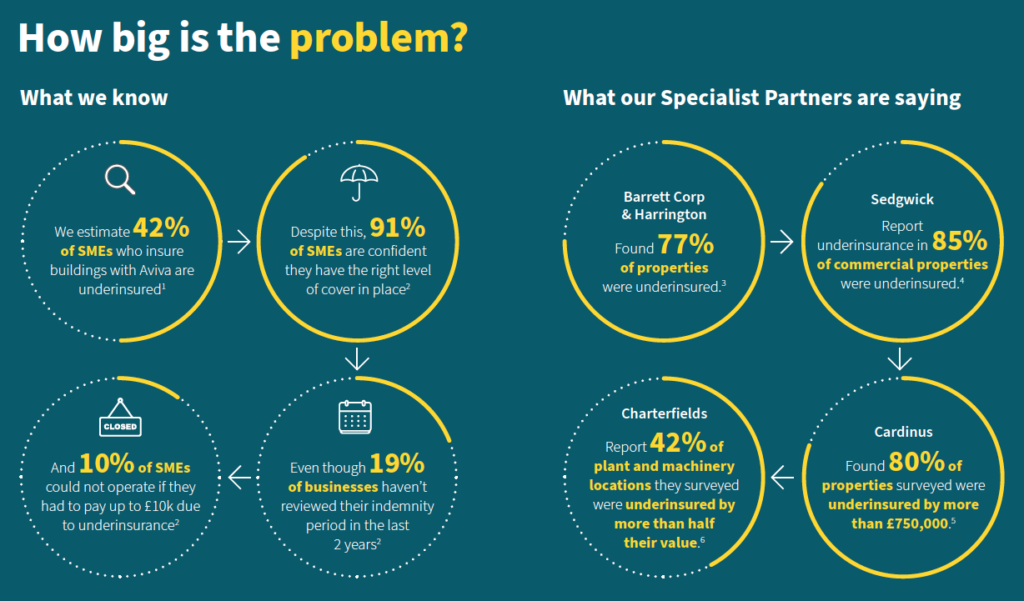
Underinsurance occurs when you don’t have enough insurance cover to meet your needs. So, if the declared values of property and assets aren’t correct, or when the time it would take to get your business back up and running after a loss is underestimated, you could be underinsured.

Unfortunately, the unexpected can happen and you may need to make a claim. If you do, the last thing you want to hear is that the level of insurance cover you have won’t cover your costs. But that’s what could happen if you’re underinsured.

How could I be underinsured?

Incorrect Sums Insured limit

It’s not nice to think of, but if you were to suffer a large loss tomorrow, how much would it cost to completely rebuild and reinstate your business?

This is what your Sums Insured limit covers. And it’s not just the bricks and mortar. This covers the cost of replacing key components including plant machinery, and equipment.

Inadequate Business Interruption (BI)

If you’ve thought about the cost of rebuilding and reinstating your business, how long do you think it would take to get all of that building work agreed and completed, and your equipment ordered and installed? Not to mention the time it will take to build back your customer base to previous levels. This is where your business interruption period comes into play. If your BI limit isn’t adequate, you may not be able to cover the full estimated loss of earnings during a period of reinstatement, leaving you financially vulnerable.

Not reviewing these limits regularly

If you haven’t had an independent professional valuation done in the last 12 months, we’d highly recommend you do so. It can be difficult to understand exactly how much cover you need at the best of times, but right now, it’s trickier than ever – inflation, increased cost of building materials, supply chain disruption and a shortage of skilled workers are all causing the cost of getting back to business to go up.

What about indexation?

If the initial Sum Insured are too low, the indexation applied to your policy in line with inflation may have little to no impact. What’s more, inflation indexation alone won’t account for costly delays or increases in other costing factors.

Aviva Business Insurance
From Aviva

Did you know…

10% of SMEs – that’s more than half a million UK businesses – believe they wouldn’t survive if they had to pay up to £10,000 towards a claim that wasn’t fully covered by insurance.

Why won’t an insurer always cover the full loss?

Any claim will only be paid based on the amount of cover chosen. This is called the ‘average clause’. Any claim you need to make – however big or small – will be impacted by the percentage difference between your recommended total sum and the actual sum for which you’re insured.

You should carefully consider the percentage difference between the recommended cover limits and the amount you choose to cover, rather than simply focusing on the total amounts.

What are the consequences?

  • Production delays
  • Employee wellbeing issues
  • Cash flow problems
  • Loss of revenue
  • Supply chain problems
  • Impact on share price
  • Loss of key employees
  • Disappointed customers
  • Reputational damage

How long will it take to get back to normal?

We call this the ‘period of indemnity’. Making sure you have calculated this correctly protects your income and cash flow if anything impacts normal operations. It can often take longer than you think to bounce back.

For instance, if a business needed to rebuild a warehouse after a fire, attaining planning permission could delay work for months. If just one piece of specialist equipment breaks down, it could mean they can’t run properly until a replacement can be sourced.

A recent analysis of large claims (over £100,000) settled by Aviva between 2018 and 2021 found that the average lifecycle to close a claim was 385 days.

However, on average, SMEs said it would take just under six months for their business to be able to return to normal operations following a major loss, such as a fire or flood. If you’re not sure what your period of indemnity should be, speak to your broker.

How do you know if you’re underinsured?

  1. Get a professional valuation
    Working out how much accidents, and other business interruptions, could set you back can be complex. But having to pay more than you bargained for – or waiting longer than you thought to get back up and running – could leave your business struggling. An expert valuation can help you get a true idea of the total value of your assets, so you can choose an appropriate level of cover.
  2. Have regular catch-ups with your broker
    It can also be difficult to stay on top of the market conditions that could affect your insurance policy – such as labour shortages, rising material costs, or wider supply chain issues. Regular catch ups with your broker can help you understand how much cover you need. It’s also important to tell them about changes you’ve made. Things like new plant and machinery, property alterations and inflated stock levels can impact the level of cover required.

Get in touch with us to discuss your policy and check you have the right level of cover in place: 01726 871144 / 69400.

Further reading and case studies

Click to read

Historical new premises for our Plymouth office

Customers visiting us at our offices in Plymouth will get a slice of history when they next visit after our move to the splendid Crownhill Fort.

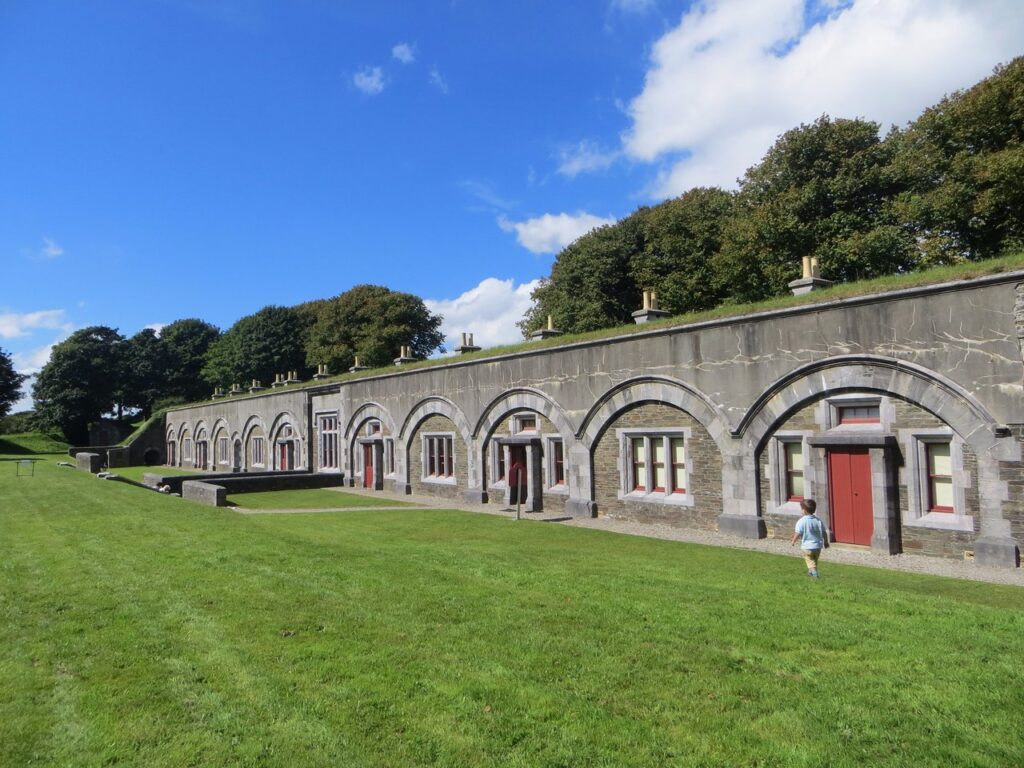
The former officers’ quarters at Crownhill Fort, Plymouth

After five years at our offices in Plymstock, we’ve outgrown the space and are moving to somewhere really special.

Crownhill Fort, built in 1868, is in the north of the city centre and is a tourist destination and conference centre as well as business premises.

The following information is kindly reproduced from the Landmark Trust (owners of the site).

Crownhill Fort was considered the most important of the forts built to defend the Plymouth naval base. Today it is equally important, though for reasons of history rather than defence. Unlike the Victorian defences of Portsmouth, which are well cared for and accessible to the public, many of the Plymouth forts have been damaged by conversion to a variety of private uses. Only Crownhill Fort has survived in anything like its original form.

In 1987 the Landmark Trust, an architectural restoration charity, recognised the importance of Crownhill Fort and, wishing to give it a secure future, purchased it from the Ministry of Defence. The Trust’s intention was not only to ensure the Fort’s preservation and to restore its original layout as far as possible, but also to open it to visitors so that they might learn and profit from the experience.

Crownhill Fort, the largest, most advanced, and least altered of Plymouth’s 19th century forts, commands one of the highest points in the city yet is surprisingly inconspicuous. Though covering 16 acres and surrounded by a broad, deep ditch hewn from bedrock, the fort appears from only a short distance to be nothing but a forested hilltop. There are, however, four fighting levels with placements for 32 cannons and six mortars, nearly a half mile of tunnels, and accommodation for 300 soldiers and officers concealed within it.

Crownhill Fort was the key to the North-East Defences of Plymouth which stretched from the Tamar River in the west to the Cattewater in the east and included nine other forts and batteries and one keep in between. It was built as part of the largest fortress building boom in British history against the perceived threat of French invasion. There were mutual feelings of fear and distrust between the two nations and after France launched the armoured steam frigate “La Gloire” in 1858, the British Navy’s ability to defend the country was seen to be gravely threatened.

Steam power had greatly improved the accuracy and range for artillery. The adoption of explosive shells, combined with ironclad ships reduced the effectiveness of existing defences. The Channel had been an obstacle to sailing ships, but by mid-century was ‘nothing more than a river passable by a steam bridge.’ In 1859, the Prime Minister, Lord Palmerston, responded to the alarm from a Royal Commission report on the defences of the United Kingdom.

The commission called for a massive fortress building programme to protect dockyards and strategic harbours at an estimated cost of £111,850,000. Parliament reduced the scales of the undertaking but nonetheless by 1867, 76 forts and batteries had been built or were under construction around the principal naval ports of Britain. Over £3,000,000 was spent on the Plymouth defences alone, with Crownhill Fort construction costing £76,000.

Crownhill Fort, along with the rest of the North-East Defences, was designed by Captain (later Major General) Edmund DuCane who also designed Staddon Fort and, with Captain William Crossman, Tregantle Fort. The great advances in military technology enabled them to break from the centuries old practice of continuous line defences. Each of the forts was designed as a polygon surrounded by a ditch which itself was protected by caponiers (powerful, casemated structures which provided flanking fire across the ditch). Guns, sometimes in casemates, lined the tops of the ramparts and the barrack blocks within were made bomb-proof by the use of mounded earth.

From its completion in 1872 until 1986, Crownhill Fort was under continuous military occupation. Various gun pits remain from World War II and the fort was used as an assembly point by forces leaving for the Falklands War.

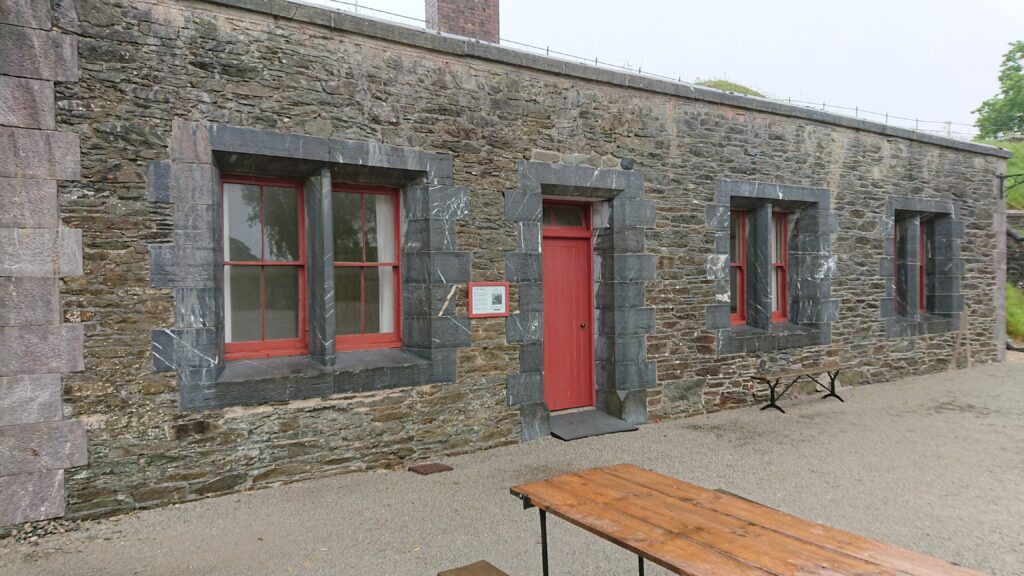
The new office in the Old Cook House

Managing Director Glyn Rowett said of the move: “It’s a fascinating historical building but customers can be sure that our working practices are as modern as ever, bringing quotes and renewals to you quickly with our customary personal service. Come and pay us a visit and enjoy a stroll around the grounds while you’re there.”

The new office address is The Old Cook House, Crownhill Fort, Crownhill Fort Rd, Plymouth, PL6 5BX and the numbers to call are: 01752 774686 or 01752 480048.

hay bales in a field

Why the Cost of Arable Land is Increasing in the UK

If you are a farmer or an aspiring farmer in the UK, you might have noticed that the cost of arable land has been increasing in recent years. According to Strutt and Parker, the average value of arable land in England reached £9,500/acre in the first quarter of 2022, which is 2% higher than a year ago and not far off the values seen at the peak of the market in 2014/2015. Prices have risen still further in 2023, up to £11,100/acre1. The average value of pasture also increased by 3% to £7,500/acre over the same period.

But what is driving this rise in land prices and is it likely to continue? Here are some of the main factors that are influencing the demand and supply of arable land in the UK.

Demand factors

  • Brexit and trade deals. The UK’s departure from the EU and the subsequent trade deals with other countries have created both opportunities and challenges for UK farmers. On one hand, Brexit has reduced some of the regulatory burdens and subsidies that were imposed by the EU’s Common Agricultural Policy (CAP), giving farmers more flexibility and autonomy over their businesses. On the other hand, Brexit has also increased the uncertainty and volatility of the agricultural markets, as well as the competition from cheaper imports from countries with lower standards. As a result, some farmers are looking to expand their land holdings to achieve economies of scale and diversify their income streams, while others are looking to exit the sector or retire. This has increased the demand for arable land from both buyers and sellers.
  • Environmental schemes and carbon credits. Another factor that has boosted the demand for arable land is the growing interest in environmental schemes and carbon credits. The UK government has introduced several initiatives to encourage farmers to adopt more sustainable and regenerative practices, such as the Environmental Land Management (ELM) scheme, which will replace the CAP subsidies from 2024. The ELM scheme will pay farmers for delivering public goods, such as improving soil health, water quality, biodiversity and climate change mitigation. In addition, some private companies are also offering carbon credits to farmers who can demonstrate that they are sequestering carbon in their soils or reducing their emissions. These schemes and credits can provide an additional source of income for farmers, as well as enhance their environmental credentials and reputation. Therefore, some farmers are keen to acquire more arable land to participate in these schemes and credits, or to sell their land to those who are interested.
  • Lifestyle buyers and investors. A third factor that has increased the demand for arable land is the influx of lifestyle buyers and investors. Lifestyle buyers are typically non-farmers who are looking for a rural retreat or a hobby farm, often driven by a desire to escape from urban stress or to pursue a more sustainable way of living. Investors are typically individuals or institutions who are looking for a long-term and stable asset class, often driven by a need to diversify their portfolio or to hedge against inflation or currency fluctuations. Both lifestyle buyers and investors are attracted by the low interest rates, the tax benefits, the capital appreciation potential and the social and environmental benefits of owning arable land. Therefore, they are willing to pay premium prices for quality land with good amenities and access.

Supply factors

  • Limited availability and low turnover. One of the main factors that has pushed up the cost of arable land is the limited availability and low turnover of land on the market. Arable land is a finite resource that cannot be easily created or expanded. Moreover, arable land is often held for a long time by farmers or families who have emotional or sentimental attachments to their land. According to Savills, the average turnover rate of farmland in England is estimated at once in every 200 years2. Therefore, there is always a scarcity of arable land for sale, especially in prime locations or regions with high agricultural productivity.
  • Rising input costs and yields. Another factor that has contributed to the rise in cost of arable land is the rising input costs and yields of farming. The input costs of farming include things like seeds, fertilisers, pesticides, machinery, labour, energy and water. These costs have been increasing over time due to various factors such as inflation, climate change, regulation and innovation. However, these costs have also been offset by increasing yields due to technological advancements, improved agronomy and crop varieties. Therefore, farming can still be profitable and viable for many farmers who can achieve high levels of efficiency and productivity on their land. This means that they can afford to pay higher prices for arable land or hold on to their existing land. The cost of arable land in the UK has been increasing due to a combination of demand and supply factors. The demand for arable land has been driven by Brexit and trade deals, environmental schemes and carbon credits, and lifestyle buyers and investors. The supply of arable land has been constrained by limited availability and low turnover, and supported by rising input costs and yields. These factors are likely to continue to influence the market for arable land in the foreseeable future, although there might be some regional variations and fluctuations depending on local conditions and events.

There are many factors that are influencing the cost of arable land in the UK, and these are likely to continue in the foreseeable future. Therefore, it is important to protect your land and your livelihood with adequate and appropriate insurance. Whether you are buying, selling or holding arable land, you need to make sure that your insurance covers all the potential hazards and liabilities that you may face, such as fire, theft, vandalism, flooding, crop failure, public liability and employer’s liability. You also need to make sure that your insurance is up to date and reflects the current value and use of your land.

At Rowett Insurance we can help. We have a team of experienced and friendly advisors who can offer you advice and tailored solutions for your farming business. Get in touch today on 01726 871144 option 2 to find out more.

References

  1. Agricultural land values in England reach six-year high – Strutt and Parker ↩︎
  2. Savills UK, Rural Land Values ↩︎