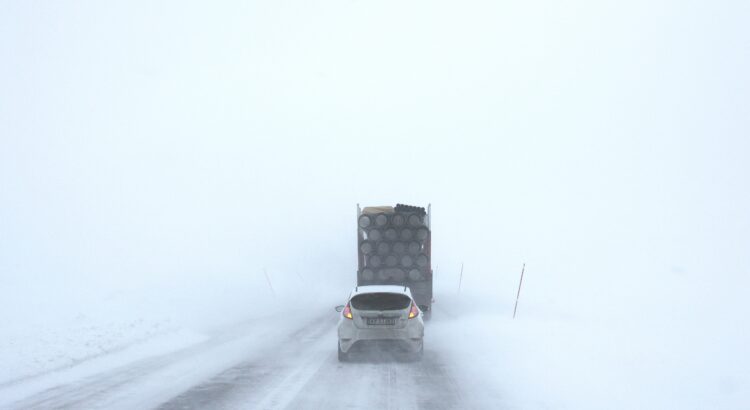
a car driving behind a lorry in snowy weather

Preparing Your Vehicles For Winter

Unexpected snowfall and treacherously icy roads can cause chaos for drivers and fleet managers. Here are some simple steps to help prepare for a season of trouble-free driving.

Servicing and maintenance

There’s no better time for a service than in the run up to winter. Maintenance throughout the season is also important, even once a service has been conducted. This should include:

  • Routinely checking the concentration of antifreeze in the coolant system, and bringing it back to the correct winter level
  • Replacing the car battery at the first sign of trouble
  • Replacing any faulty light bulbs immediately
  • Keep at least a quarter of a tank of fuel in case of unexpected delay
  • For fleets, your customers should train and ensure drivers know how to deal with adverse conditions

Tyres

Regular visual checks will highlight any prominent defects to tyres. Any damage to the tyre walls such as cuts, cracks or bulges should be dealt with immediately as they could lead to slow punctures or blow-outs at high speeds.

In winter, drivers should ideally have a minimum tread depth of 3mm, as this helps the car to remove additional surface water on the road. Anything less than 2mm remaining on a tyre should be replaced immediately.

Consider installing winter/all season tyres; they are specifically designed to provide increased grip in winter conditions. In extreme weather, snow chains are also worth considering. Any tyre enhancements must be fitted to the manufacturer’s standards.

Do not under-inflate tyres; it is a myth that a softer tyre means better grip.

Prepare for the worst

You can rest in the knowledge that you’re prepared for the worst by stocking your vehicle(s) with the following items:

  • Ice scraper / de-icer spray
  • Powerful torch with spare batteries
  • Reflective triangle
  • First aid kit
  • Warm clothing, shoes and blankets
  • Insurance and broker documents, including any contact information for emergency claim hotlines
  • Bottled water and non-perishable foods
  • Jump leads
  • Snow shovel
  • Tow rope
  • Complete set of replacement light bulbs
  • Always carry a mobile phone and spare batteries

Preparing and driving the car

Allow at least 10 minutes more in the morning to prepare your car.

Clear all windows of snow and ice, and clear the roof of snow.

Give extra time for your journey and stick to main roads where possible.

Always let someone know where you are going, and when you expect to arrive.

For fleet managers, vehicle tracking tools are available.

Gentle manoeuvres are the key, particularly when braking.

Always try to pull away in second gear, and select a higher gear such as third or fourth for travelling downhill.

In the event of skidding, depress the clutch, steer into the skid and avoid the temptation to brake forcefully.

Black ice can appear to be just a wet patch, so be wary.

Always put your safety before punctuality in winter conditions.

Listen to local traffic reports and heed advice from your local authority or police concerning driving safety.

Want to find out how we can help insure your vehicles, whether it be commercial motor, car, agricultural vehicles or fleets, all one on policy? Get in touch with Rowett Insurance on 01726 871144 today. 

Or head here for more information on vehicle insurance.

 *This article originally appeared on Allianz.

people in a meeting with laptops

10 Reasons why You Need Professional Indemnity Insurance

If a company is providing advice, design, skills or knowledge in a professional capacity, or handling intellectual property, they are wholly responsible for getting it right. Professional Indemnity (PI) covers the insured against their legal liability to compensate third parties for injury, loss or damage due to a breach of duty in the conduct of their profession.

The team at Rowett Insurance has teamed up with Allianz to tell you 10 reasons why you might just need PI insurance:

1) Mistakes can happen

Companies will avoid mistakes and give the best advice or services possible to ensure good client relationships. However, mistakes can happen, leaving the company open to large legal costs and compensation claims. Negligence is a core cover for PI and would provide protection against allegations made.

2) Compulsory or optional?

For many professions, such as chartered accountants and chartered surveyors, it is a regulatory requirement to have PI insurance to practice. Not having this cover could mean a business being stripped of its regulated status, making it difficult to operate.

3) Intellectual property

Unintentionally producing materials that infringe intellectual property rights, e.g. using online images without the owner’s permission, could lead to litigation for copyright. PI can protect a company against legal costs and compensation.

4) No PI insurance, no contract

It’s becoming more common for clients to request that PI cover is in place before a business relationship commences. Having PI gives confidence to clients that businesses are run professionally.

5) Vulnerability if a claim is brought against you

Each time a professional gives advice or offers a service for a fee, they are potentially vulnerable. From SME’s to large corporations, having no PI insurance could leave a company’s financial position exposed.

6) Handling clients’ information

Even with adequate data protection and policy procedures in place, data can sometimes accidentally get lost. PI would cover the cost to replace or restore any damaged, distorted, erased or mislaid documents including electronic or digitised data.

7) Employee negligence

Even with an extensive training programme for new and experienced staff, the way employee’s carry out their work activities is ultimately beyond the company’s control. This could leave the company exposed to liability claims. PI cover gives peace of mind in the event of an employee’s negligence.

8) A duty of care

Professionals could owe a duty of care to anybody who may rely on the service or advice they have provided. In today’s world, clients expect high standards of service and are more inclined to resort to litigation when this has not been met. PI insurance would provide protection against such claims.

9) Peace of mind

There’s a lot to consider when running your own business, especially the responsibility of getting things right. PI cover takes away the legal and financial worries should a PI claim arise to ensure businesses continue to operate as usual.

10) Defamation cover

PI cover will provide protection against an accidental lapse in judgement resulting in a defamation claim. For example, sharing information via social media about a client which can be perceived as negative or slanderous.

Claims Example

An acoustic consultant failed to adequately design the acoustics of a concert hall. As a result of the negligent design, when the concert hall was fully constructed, those patrons sitting at the rear of the auditorium could barely hear what was happening on the stage. The claim was settled for £35,000.

Claims Example

A marketing agency was commissioned to print brochures for a client. When the brochures were printed, the agency realised that they had made a mistake in the spelling of the web address and contact details. The reprinting costs of over £12,000 were met by the PI cover.

Want to know more?

If you want to find out more about Professional Indemnity Insurance and whether it’s right for your business, get in touch with the team at Rowett Insurance on 01726 871144 or email office@rowett-insurance.co.uk